Rochester Electronics
The largest Craft Commerce site
Hundreds of thousands of products. Impeccable uptime and performance. Advanced commerce features.
Rochester Electronics
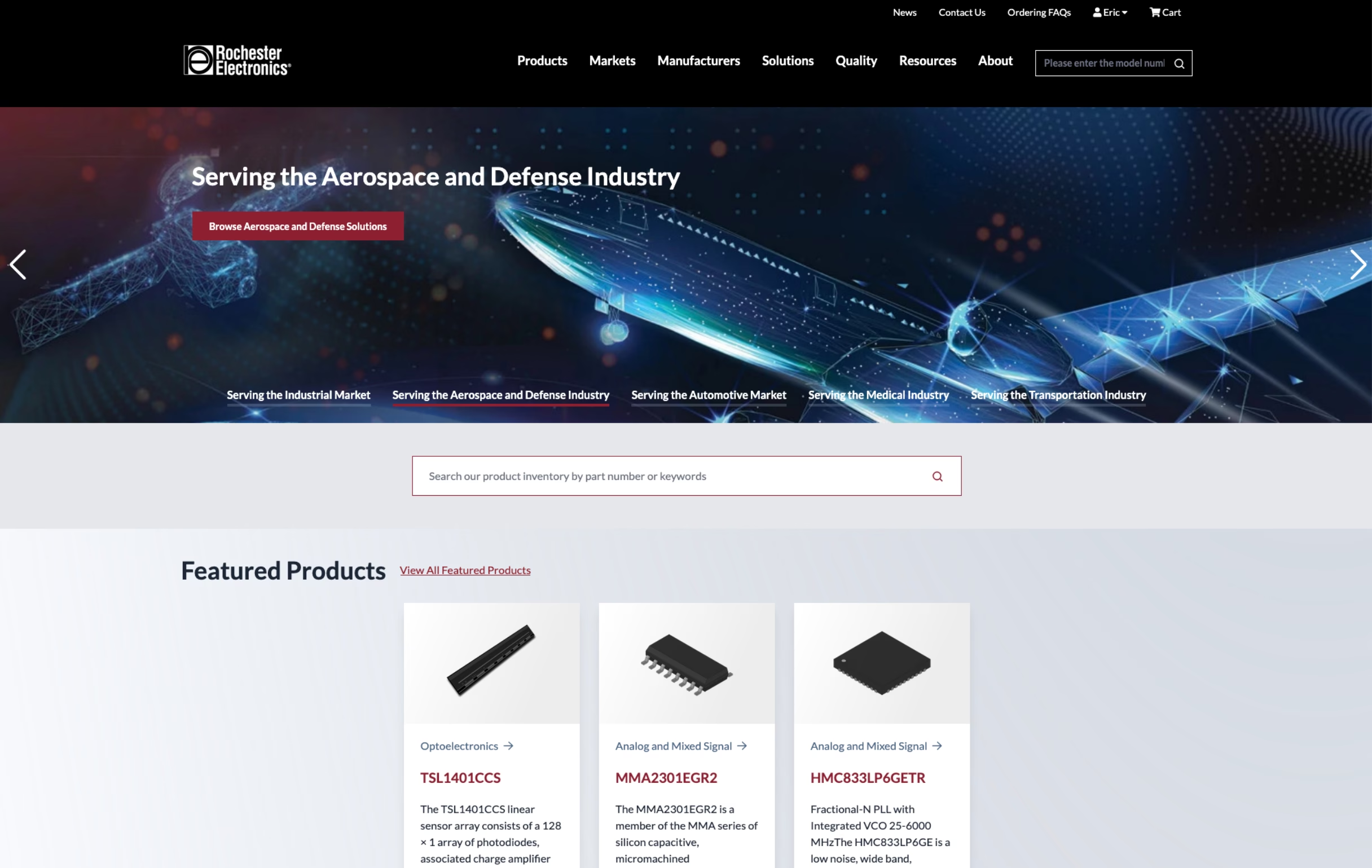
Rochester Electronics was our first Craft CMS client, and nearly a decade later, we're still building together. The engagement began in Q4 2016 — back when Craft Commerce was a young platform and a 250,000-SKU storefront was an open question, not a proven pattern. Today, the Rochester Electronics site holds the distinction of being the world's largest Craft Commerce deployment.
About Rochester Electronics
When a semiconductor reaches end-of-life, the systems built around it don't. Aircraft, medical equipment, industrial controls, defense platforms — these products outlive the chips inside them by decades, and a counterfeit or unavailable component can mean grounded fleets, halted production lines, or worse. Rochester Electronics exists to solve that problem.
Founded in 1981 and headquartered in Newburyport, Massachusetts, Rochester is the world's largest continuous source of semiconductors, 100% authorized by more than 70 leading manufacturers. The company holds over 15 billion devices in stock across more than 250,000 part numbers, plus 12 billion die available for ongoing production of more than 70,000 device types. From design and wafer processing through assembly, test, and IP archiving, Rochester delivers fully traceable, fully guaranteed semiconductors to OEMs, contract manufacturers, and distributors worldwide
The Project
In 2016, Rochester Electronics — the world's largest continuous source of semiconductors — came to us without an e-commerce presence. What started as a small initiative has grown into one of the largest Craft Commerce deployments in the world, with over 250,000 SKUs, a bespoke search experience built on Elasticsearch, custom pricing logic that handles tiered, distributor, and sub-penny pricing, and a checkout process engineered for the realities of selling parts subject to national security controls. Behind it sits a richly cross-referenced data model that lets buyers navigate the catalog the way engineers actually think, and an Airflow-driven data pipeline that keeps product information flowing into a Craft Commerce installation we forked and tuned to operate two orders of magnitude beyond its original design parameters. Nearly a decade in, the site has become a strategically important sales channel — a piece of core business infrastructure that started as a question and became an answer.
Product Catalog Scale
Craft Commerce was built for stores with a few thousand products. Rochester needed to launch one with a quarter of a million. Off-the-shelf wasn't going to cut it — at that scale, every assumption baked into the platform becomes a bottleneck, and every page load becomes a stress test.
So we re-engineered it. We maintain a custom fork of Craft Commerce with targeted performance enhancements — added database indexes where queries were grinding, removed unused functionality that was quietly dragging the site down. Product data flows in through an Airflow pipeline that imports new and updated SKUs directly into the database, bypassing the bottlenecks of the standard import path. The result is a Craft Commerce store operating two orders of magnitude beyond what the platform was designed to handle.
Custom Pricing
Pricing at Rochester's scale isn't a single number — it's a matrix. Different customer tiers see different prices, authorized distributors operate on their own pricing structures, and some semiconductors are sold in volumes where the per-unit cost falls below a single cent. We built custom pricing logic into Craft Commerce to handle all of it: tiered pricing that adjusts based on customer classification, distributor-specific pricing for channel partners, and — because Craft Commerce's core pricing engine assumed whole-cent values — a modification to the platform itself to support sub-penny prices without rounding errors creeping into million-unit orders.
Advanced Search
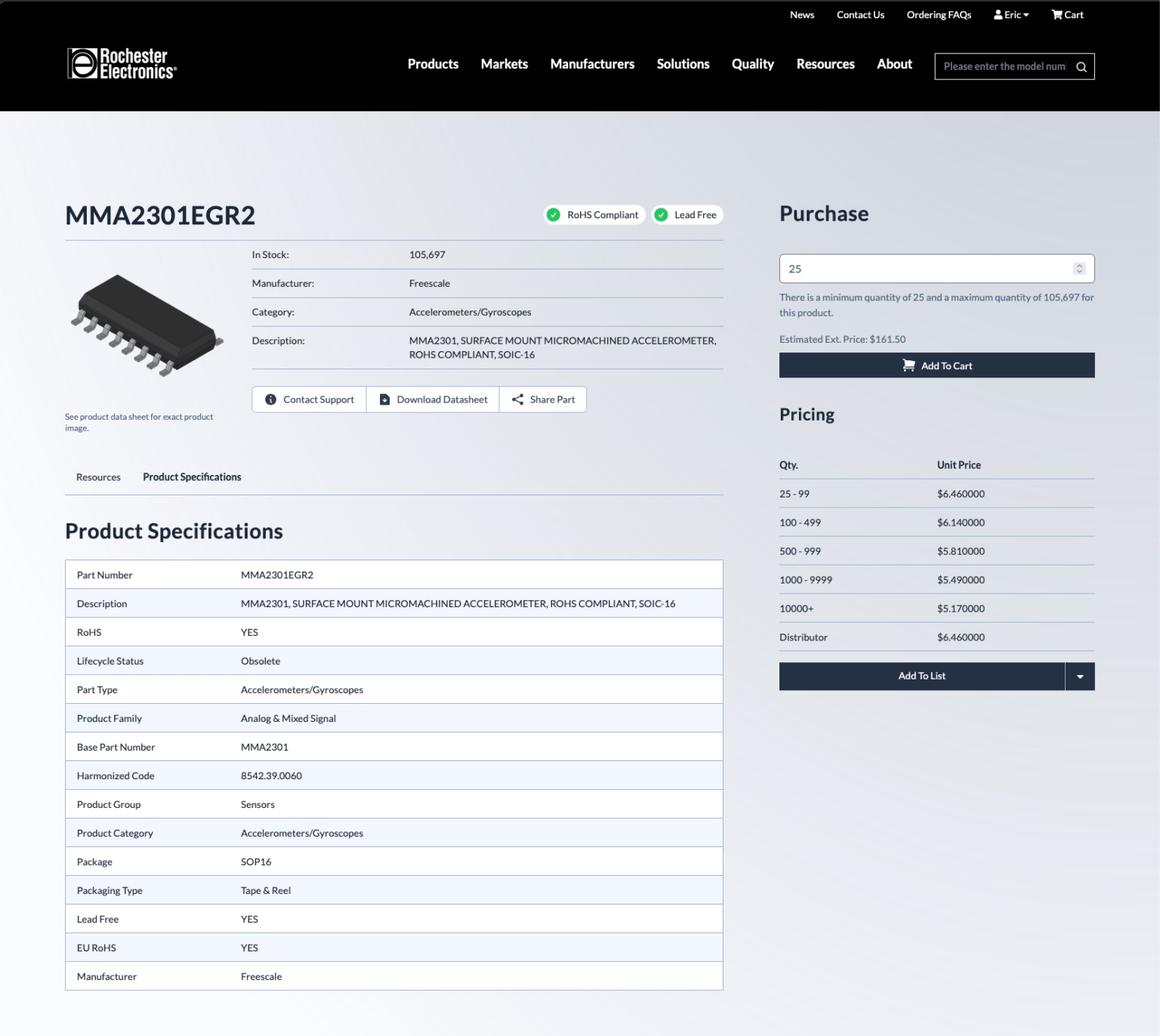
Craft's built-in search wasn't going to find a specific part among 200,000 of them. So we replaced it entirely. We built a bespoke search system on Elasticsearch, with a faceted interface that lets engineers and procurement teams narrow results by manufacturer, package type, availability, and the dozens of other attributes that matter when sourcing a semiconductor. Behind the facets sits a custom relevancy algorithm tuned for the realities of parts search — it weighs not just how closely a query matches a part number, but also whether the part is in stock, how complete its datasheet coverage is, the manufacturer, and other signals that determine whether a result is actually useful. The result is a search experience built for the way semiconductor buyers actually work, not the way a generic CMS assumes they do.
Bespoke Checkout Process
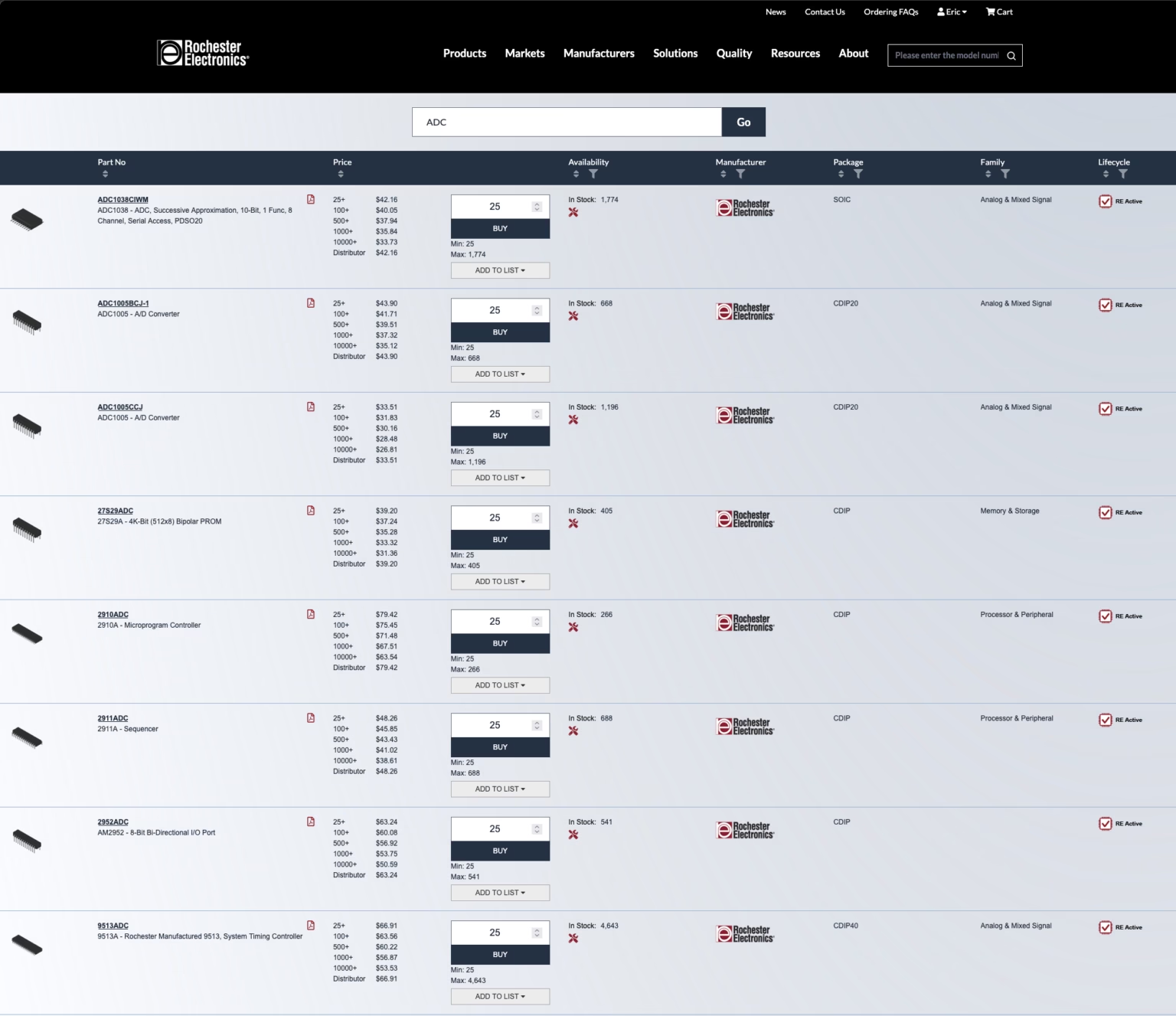
Checkout for a semiconductor distributor isn't a shopping cart — it's a compliance checkpoint. Many of the parts Rochester sells are subject to U.S. export controls, and shipping the wrong component to the wrong destination isn't a customer service problem, it's a federal one. We built a bespoke checkout process to handle the reality of selling parts deemed essential to national security, with custom verification steps and gating logic that flag restricted items, validate customer eligibility, and ensure every order clears the right checks before it ships. We also implemented full address book functionality, so repeat buyers — who often ship to dozens of facilities across multiple countries — don't have to re-enter shipping details with every order.
Rich Data Model
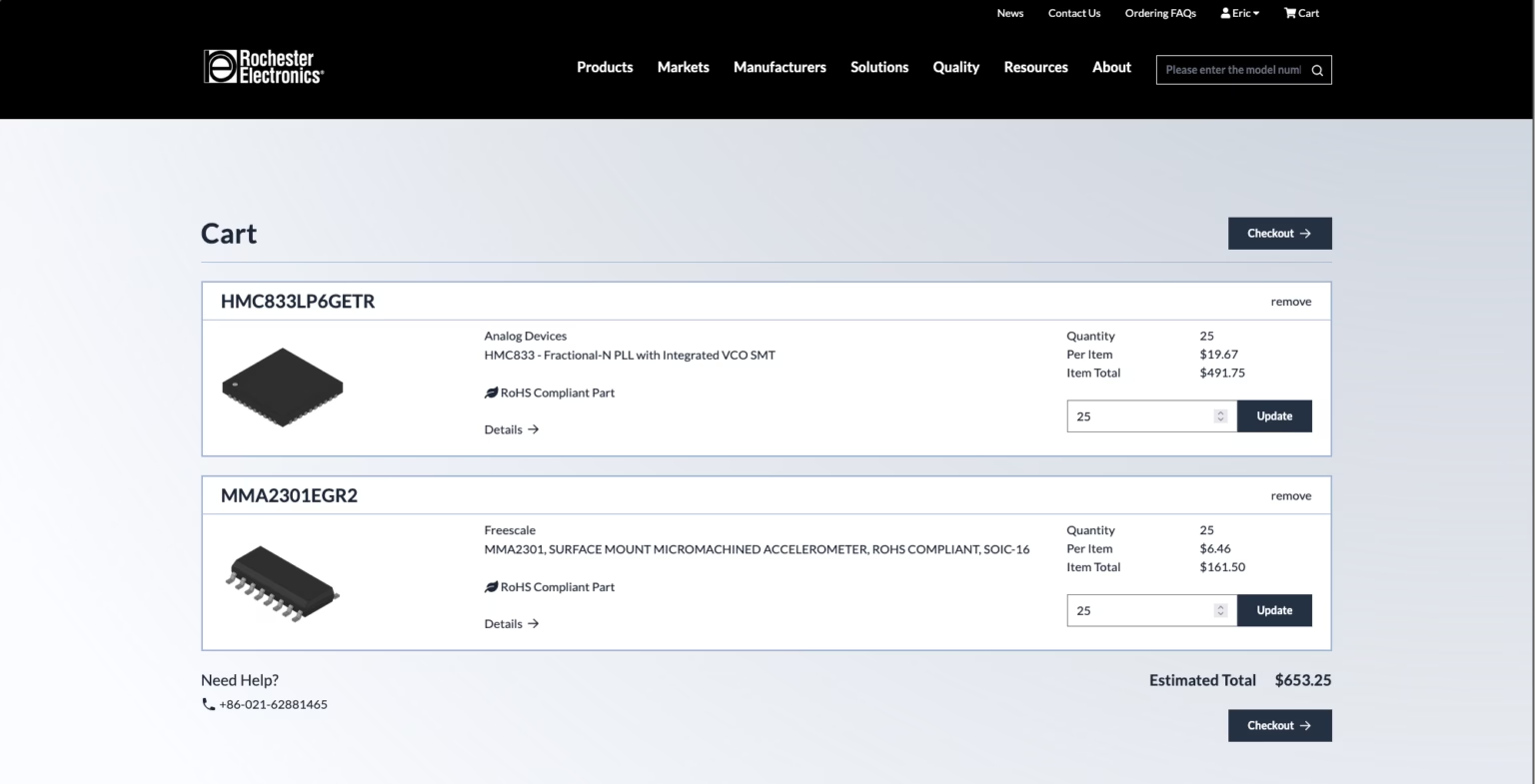
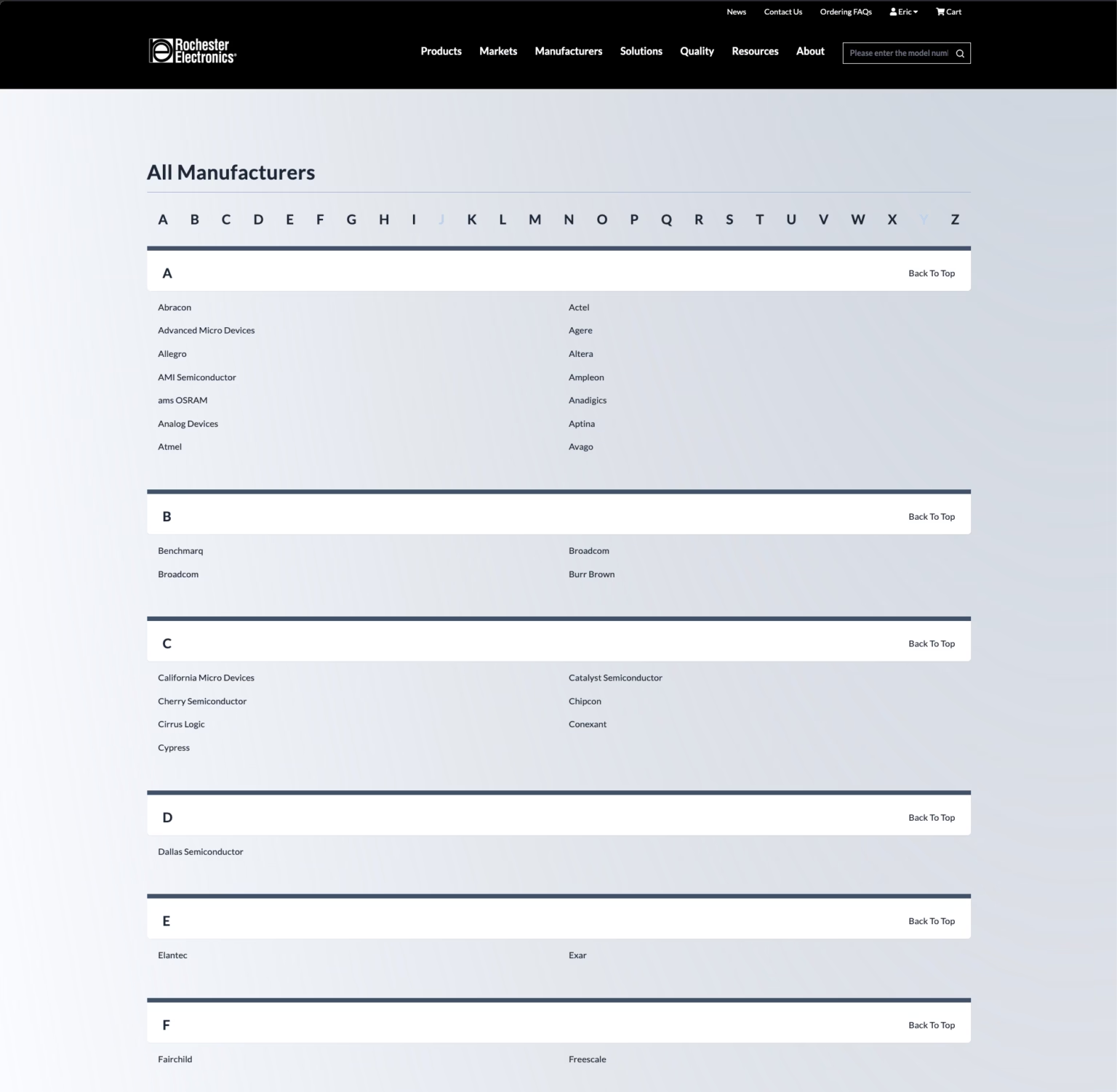
Underneath every search result and product page is a data model built for the way buyers actually navigate a parts catalog. Parts link to manufacturers and manufacturers back to their parts. Parts link to categories, and categories organize parts into the taxonomies engineers think in — by function, by package, by application. The model is bidirectional and richly cross-referenced, so a buyer who lands on a single part can pivot in any direction: see everything else that manufacturer makes, browse other parts in the same category, or follow the relationships outward until they find what they're really looking for. It's a catalog designed for exploration, not just lookup.
The Outcome
When we started with Rochester in 2016, they didn't have an e-commerce site at all. What began as a small initiative — an experiment in whether semiconductors could be sold online at scale — has since become one of Rochester's most strategically important sales channels. The site has driven measurable revenue growth and opened doors into markets and customer segments Rochester couldn't easily reach through traditional sales motions. The store that started as a question has become core infrastructure for the business.