Custom Craft
When Craft Needs to Do Something It Wasn't Built to Do
Craft CMS is flexible enough to handle the vast majority of content management and commerce requirements out of the box. But "the vast majority" isn't "all of them." When your business logic, workflow requirements, or integration needs exceed what Craft provides natively, you don't switch platforms—you extend the one you have.
Custom Craft development is how we make Craft do things its creators never specifically planned for. Custom modules that embed your business logic directly into the control panel. Plugins that add capabilities the ecosystem doesn't offer yet. And in rare cases, modifications to Craft's core behavior when no other approach is sufficient.
This is where the depth of our Craft expertise matters most. Extending a platform safely—without breaking upgradability, creating performance problems, or building something unmaintainable—requires understanding how the platform works at the framework level, not just the template level.
Why Custom Development Matters
The alternative to custom development is compromise. Either you bend your business process to fit what the CMS can do, or you bolt on external services and manually bridge the gaps between them. Both approaches work—for a while. Then the cost of the workarounds exceeds the cost of building the right solution.
We've seen organizations running critical business processes through spreadsheet exports because their CMS couldn't generate the report they needed. Editorial teams copying content between three systems because there was no integration. Commerce operations manually adjusting prices across hundreds of products because the pricing logic didn't exist in the platform.
Every one of those is a custom development problem hiding behind a manual workaround. And every one of them is solvable within Craft.
What We Build
Module Development
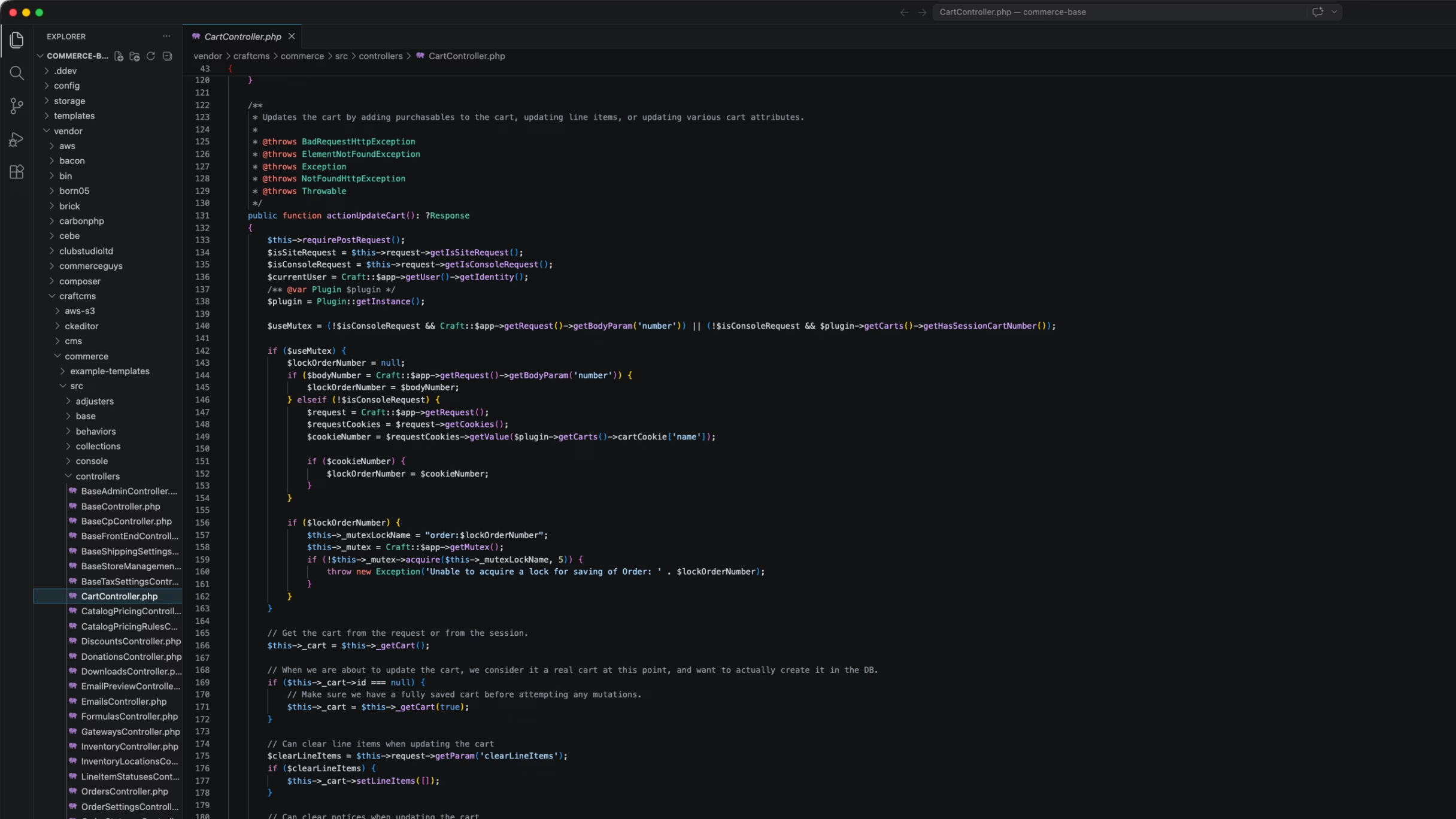
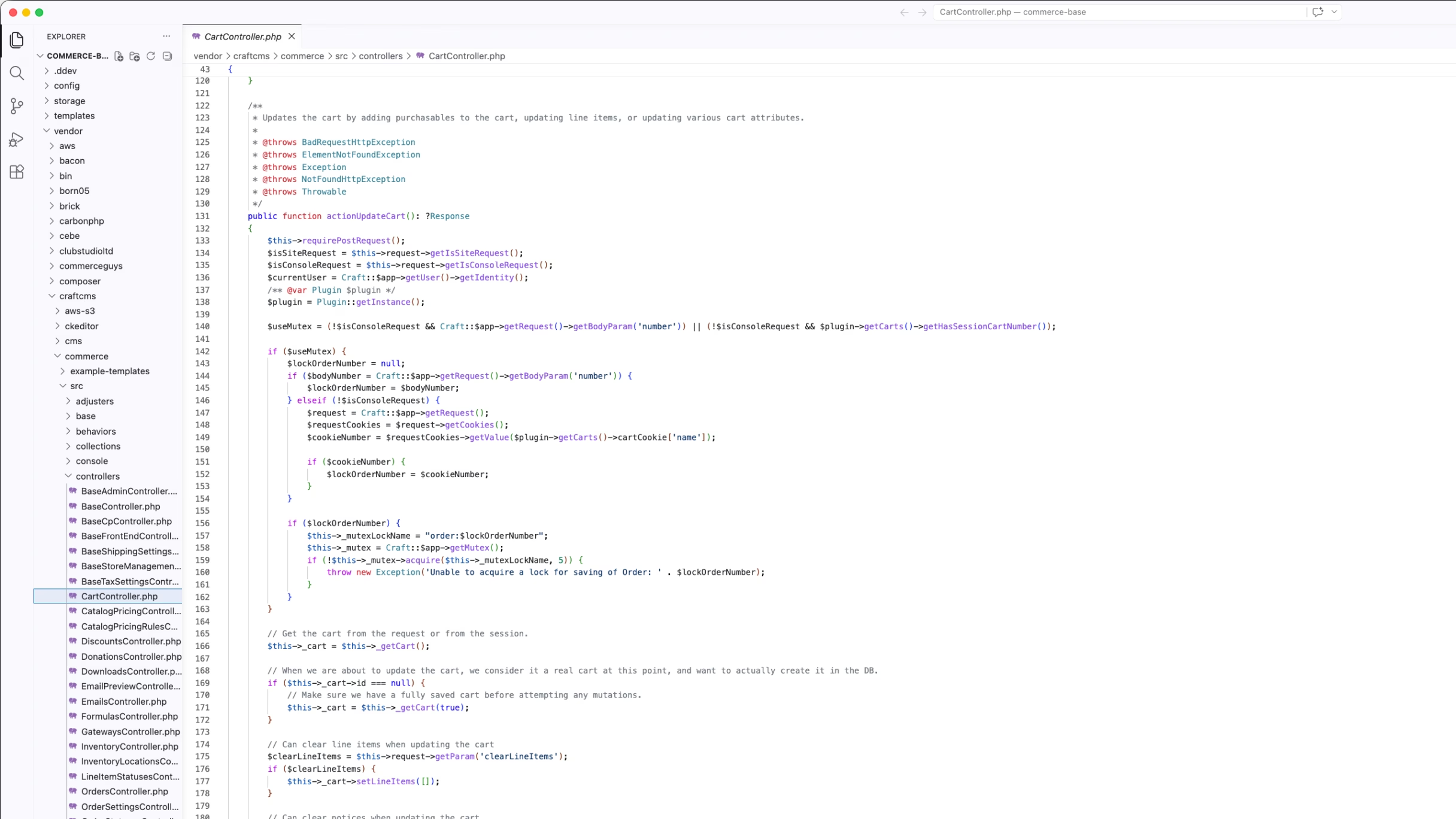
Modules are the primary way we extend Craft. A module is custom PHP code that lives within your Craft installation, has full access to Craft's APIs and services, and can add virtually any functionality: custom field types, dashboard widgets, control panel sections, business logic automation, data processing pipelines, and integrations with external systems.
Modules are specific to your installation—they're not published to the plugin store, they're not generic, and they're not designed for anyone else's use case. This means we can build exactly what you need without the abstraction overhead of making it work for every possible Craft site.
Examples of modules we've built include custom pricing engines that calculate quotes based on dozens of business variables, editorial workflow systems with approval chains and notification routing, automated content syndication pipelines that distribute content to external platforms, real-time data synchronization between Craft and enterprise systems, and custom reporting dashboards that give stakeholders the specific metrics they care about.
The key to good module development is building something that feels native to Craft. Your editors shouldn't be able to tell where Craft ends and your custom module begins. The UI patterns, the data flow, and the control panel experience should all feel like part of the same platform.
Forking Craft
In rare cases—and we mean rare—the right solution requires modifying Craft's core behavior in ways that modules can't achieve. This might involve changing how a core element type behaves, modifying the control panel's rendering logic, or adding security controls at a level deeper than the plugin API exposes.
We maintain private forks with careful merge management so that Craft updates can still be applied. This is not something we recommend lightly. A fork creates ongoing maintenance overhead and upgrade complexity. We'll exhaust every other option first and be transparent about the long-term cost. But when a fork is genuinely the right answer—and occasionally it is—we know how to do it responsibly.
How We Approach Custom Development
Start With the Problem, Not the Solution
Before writing any code, we need to understand the business problem deeply enough to know whether custom development is actually the right answer. Sometimes the solution is a configuration change. Sometimes it's an existing plugin. Sometimes it's a workflow adjustment that doesn't require code at all. We'll tell you if that's the case.
When custom development is the right answer, understanding the problem thoroughly prevents us from building the wrong thing. We define the requirements, the edge cases, the data flows, and the integration points before opening an editor.
Build for Maintainability
Custom code becomes your team's responsibility to maintain—or ours, if we're on a retainer. Either way, it needs to be understandable, well-documented, and built to withstand Craft version upgrades without breaking.
We write custom code with the same standards we'd apply to open-source work: clear naming, comprehensive comments, automated tests where the complexity warrants it, and documentation that explains not just what the code does but why it was built that way.
Test Against Craft Updates
One of the biggest risks with custom development is that a Craft update breaks your custom code. We test our modules and plugins against Craft's beta releases before major updates ship, and we structure our code to minimize coupling to Craft's internal APIs that are more likely to change between versions.
Custom Craft FAQ
-
01
How do I know if I need custom development versus a plugin that already exists?
We'll help you figure that out. The Craft plugin ecosystem is extensive, and for many common needs—SEO tooling, form builders, image optimization, email integration—there's a well-maintained plugin that does the job. We recommend existing plugins when they're a good fit. Custom development is the answer when your requirements are specific to your business, when existing plugins don't quite solve the problem, or when the plugin that covers your use case is poorly maintained or has performance issues.
-
02
How much does custom module development cost?
It ranges widely based on complexity. A simple custom field type or dashboard widget might take a few days. A comprehensive business logic module with a custom control panel interface, data processing, and external integrations can take weeks. We'll scope the work during discovery and give you a clear estimate before development starts. For reference, most custom module projects fall in the $10,000–$75,000 range.
-
03
Will custom modules survive Craft version upgrades?
When built properly, yes. We develop against Craft's stable public APIs and avoid relying on internal implementation details that are more likely to change. Before major Craft versions ship, we test our custom code against the release candidates and address any compatibility issues. That said, major version upgrades (Craft 4 to 5, for example) sometimes require module updates—this is normal and we plan for it.
-
04
Can you take over custom modules that another team built?
Yes, though we'll need to assess the code quality first. Well-built custom modules are straightforward to maintain. Poorly built ones may need refactoring before we can work with them reliably. We'll give you an honest assessment of the code's condition and what it would take to bring it to a maintainable state.
-
05
Do you build functionality as modules or plugins? What's the difference?
Modules are tied to your specific Craft installation and can't be installed elsewhere. Plugins are portable, installable via Composer, and can be distributed to other Craft sites. We default to modules for business-specific functionality and use plugins when the code needs to work across multiple installations or when you want to contribute it to the Craft ecosystem. The development effort is similar; the difference is in packaging and distribution.