Skip to content

Performance.

Every Millisecond Is a Decision Your Users Make for You

A 100ms delay feels instant. A 300ms delay is noticeable. A 1-second delay breaks concentration. A 3-second delay and a meaningful percentage of your visitors have already left. Performance isn't an abstract engineering goal—it's the lived experience of every person who visits your site.

We optimize Craft sites across the entire stack: frontend delivery, backend processing, database queries, and caching strategy. We measure before we touch anything, prioritize by impact, and prove the results with real data.

Have a project that needs serious engineering? We reply within one business day.
Start a conversation

Why Craft Sites Get Slow

Craft itself is well-built software. But Craft sites get slow for the same reasons any web application gets slow: accumulated complexity, unoptimized queries, missing cache layers, and frontend bloat that nobody noticed because it happened gradually.

The most common culprits we find in Craft performance audits are eager-loading patterns that fetch far more data than the template needs, Twig templates that trigger dozens of database queries per page, images served at original resolution without proper sizing or format optimization, third-party scripts that block rendering, and caching strategies that are either absent or misconfigured.

None of these are hard to fix individually. The challenge is finding the right ones to fix—the changes that will have the biggest impact on the metrics that matter for your site.

What We Do

01

Speed Audits

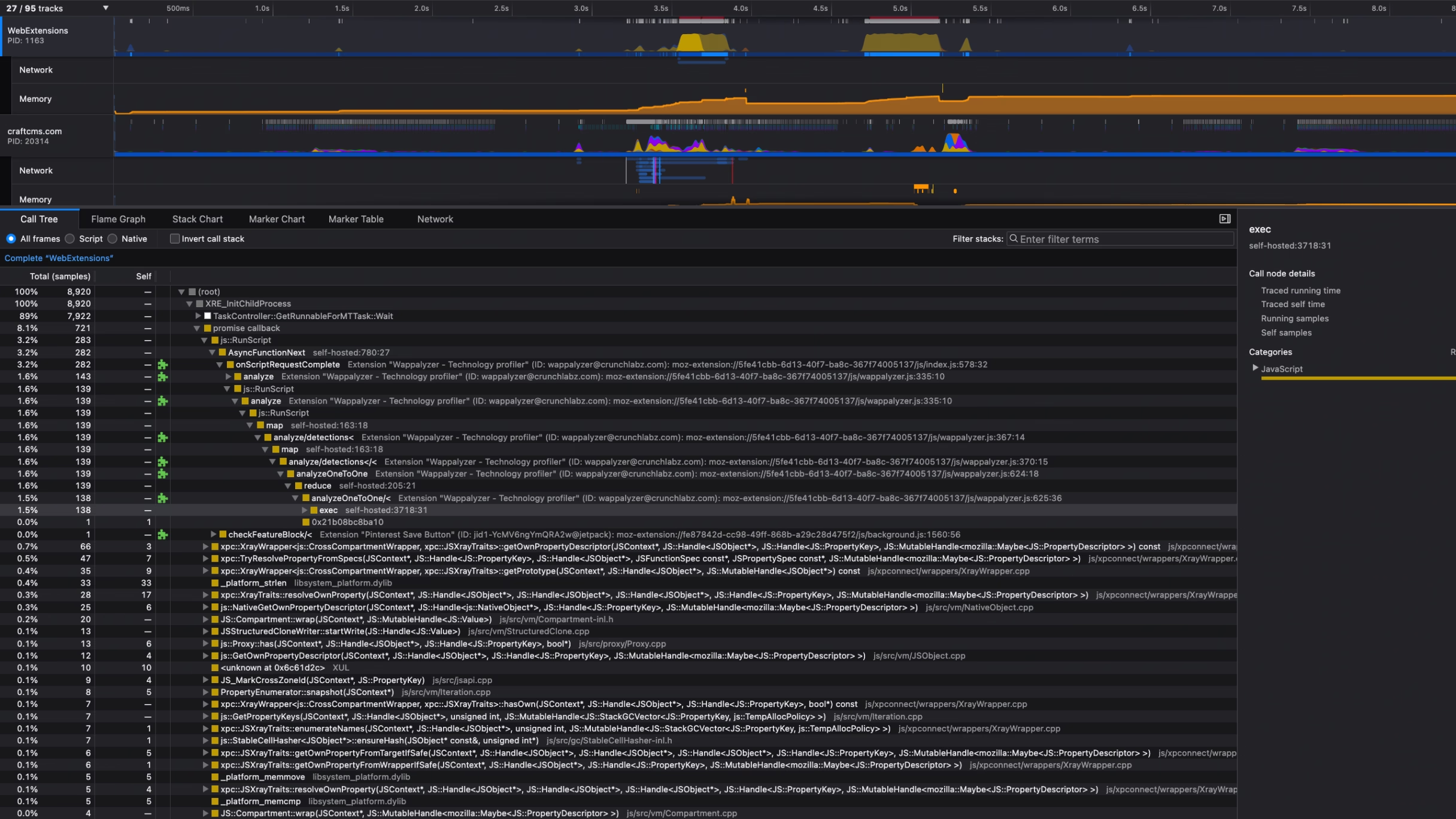
Every performance engagement starts here. We profile your site end-to-end using real browser testing, server-side instrumentation, and load simulation. The output is a prioritized report that tells you exactly what's slow, why it's slow, and what fixing it would be worth in measurable improvement.

We don't just run Lighthouse and hand you the output. We dig into Craft's debug toolbar data, analyze database query logs, profile PHP execution, examine cache hit rates, and test under realistic traffic conditions. The audit produces a ranked list of interventions ordered by impact-to-effort ratio—so you know what to fix first regardless of budget.

02

Frontend Performance

The browser is where your users experience performance. We optimize everything that happens between the server's response leaving the wire and the page becoming interactive. Critical rendering path optimization, image format and sizing strategy (WebP, AVIF, responsive srcset), JavaScript bundling and tree-shaking, CSS delivery strategy, font loading optimization, and Core Web Vitals tuning.

We pay particular attention to Largest Contentful Paint (LCP), First Input Delay (FID), and Cumulative Layout Shift (CLS)—the metrics Google uses for search ranking and the ones that most directly reflect user experience.

03

Backend Optimization

Server response time is the floor that everything else is built on. If Craft takes 800ms to generate a page, your total load time can never be less than 800ms regardless of how optimized your frontend is.

We optimize Craft's backend performance by profiling PHP execution, identifying slow Twig template patterns, reducing database query count and complexity, implementing proper eager-loading strategies, and configuring Craft's built-in caching and query caching for maximum effectiveness. For commerce sites, we also optimize cart, checkout, and catalog query patterns that tend to be the heaviest operations.

04

Database Tuning

The database is usually where the biggest performance wins hide. Craft sites with complex content models, large entry counts, or heavy relation field usage can generate hundreds of queries per page load—many of them redundant or poorly indexed.

We analyze query logs to identify the most expensive and most frequent queries, add targeted indexes, restructure queries to reduce N+1 patterns, and configure MySQL or PostgreSQL for optimal performance with your specific data profile. We've seen single index additions cut page generation time in half.

Performance FAQ

  • 01

    How do I know if my site needs performance work?

    Measure it. Run your key pages through WebPageTest or Google's PageSpeed Insights. If your Time to First Byte (TTFB) exceeds 500ms, your backend is slow. If your Largest Contentful Paint (LCP) exceeds 2.5 seconds, your overall delivery is slow. If your site feels sluggish to use—slow navigations, delayed interactions—there's work to do. Our speed audit gives you the complete picture with specific numbers and recommendations.

  • 02

    Can you optimize a site you didn't build?

    Yes—this is a significant portion of our performance work. We regularly optimize Craft sites built by other agencies and internal teams. We don't need access to the original developers or their documentation. We profile the live site, identify bottlenecks, and fix them. The codebase tells us everything we need to know.

  • 03

    How much improvement should we expect?

    It depends on the starting point and the nature of the problems. Sites that have never been optimized typically see the most dramatic improvements—we've taken 6-second page loads down to under 1 second, and 1.2-second TTFB down to under 100ms. Sites that have had some optimization already will see smaller but still meaningful gains. We'll give you realistic projections after the speed audit.

  • 04

    Will performance optimization break anything?

    It shouldn't, and we take precautions to ensure it doesn't. We test every change in staging before deploying to production, we monitor key metrics after deployment, and we have rollback plans for every intervention. Some optimizations—like aggressive caching—require careful configuration to avoid serving stale content, and we handle that with appropriate cache invalidation strategies.

  • 05

    Is performance optimization a one-time thing?

    The initial engagement addresses your current bottlenecks, but performance degrades over time as content grows, features are added, and third-party scripts accumulate. We recommend ongoing performance monitoring and periodic re-audits—either through a support retainer or on a scheduled basis.

Get Started

Ready to Build Something Exceptional?

Tell us about your project. Whether you're starting fresh, scaling up, or rescuing something that's gone sideways - we'll give you an honest assessment, not a sales pitch.