Skip to content

Headless.

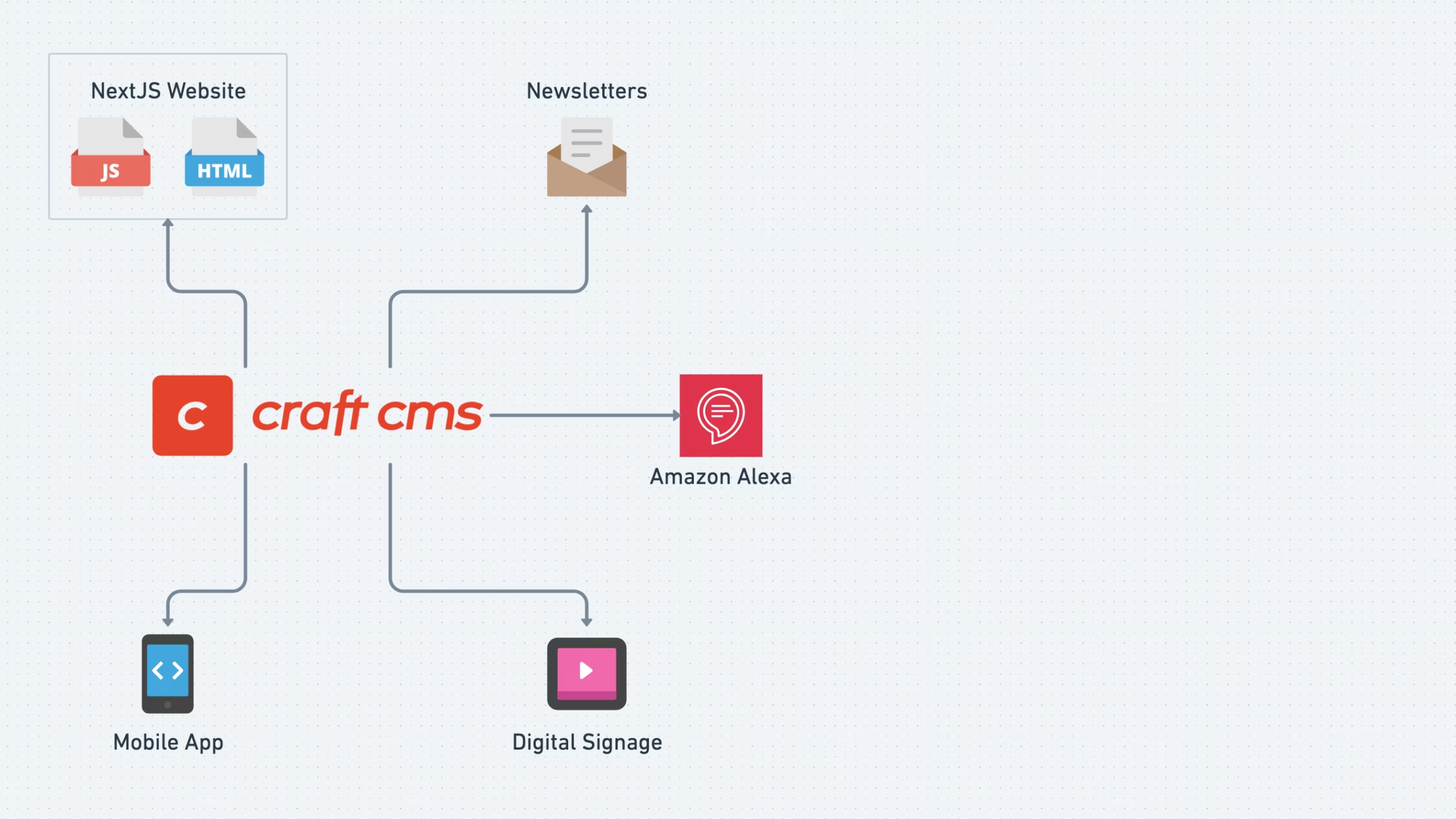
One CMS. Every Channel.

This isn't a trend we're chasing. We've been building headless Craft implementations since Craft first shipped its GraphQL API. We understand the tradeoffs, the decisions that matter, and the operational complexity that comes with separating your CMS from your frontend. We also know when headless is the wrong choice—and we'll tell you.

Have a project that needs serious engineering? We reply within one business day.
Start a conversation

The Promise and the Reality

The promise of headless is compelling: manage content once, deliver it everywhere, use whatever frontend technology your team prefers, and iterate on the presentation layer without touching the CMS.

The reality is more nuanced. Headless gives you maximum flexibility at the cost of additional complexity. You lose Craft's built-in preview system. Your deployment pipeline gets more complicated. You need a separate hosting strategy for your frontend. Content editors can't see their changes in context without additional tooling. And every frontend you add is another application to build, test, deploy, and maintain.

None of this means headless is wrong. It means the decision should be deliberate, not driven by hype. When your requirements genuinely call for it—multiple frontends, a frontend framework your team is invested in, or a need for performance that server-rendered Twig can't deliver—headless is the right architecture. We help you make that decision clearly and then execute it properly.

What We Build

01

GraphQL API Architecture

Craft's native GraphQL API is the backbone of headless implementations. We design and optimize the API layer for production use—setting up query complexity limits to prevent expensive queries from degrading performance, implementing persisted queries for security and speed, building caching layers that reduce load on Craft while keeping content fresh, and structuring the schema so frontend developers get exactly the data they need without over-fetching.

We also extend the GraphQL API when Craft's built-in schema doesn't cover your requirements—custom types, computed fields, and specialized query resolvers that map to your frontend's data needs.

02

Jamstack & Modern Frontend Frameworks

We build production Jamstack frontends with Next.js, Nuxt, Gatsby, and Astro—each chosen for the right reasons, not team preference. Next.js for dynamic, app-like experiences with server-side rendering. Nuxt for Vue-based teams. Gatsby for content-heavy sites that benefit from build-time rendering. Astro for performance-critical sites that need minimal client-side JavaScript.

Critically, we implement incremental static regeneration (ISR) and on-demand revalidation so your content team's changes go live without waiting for a full site rebuild. The editorial experience should feel as immediate as a traditional Craft site, even though the architecture is fundamentally different.

03

Mobile Backend Systems

Craft as a mobile backend means your iOS and Android applications are powered by the same content and commerce engine as your website. Product catalogs, editorial content, user accounts, and order management all live in Craft and are delivered to native apps through the API.

We build the API layer optimized for mobile consumption—accounting for variable network conditions, battery-conscious data fetching, and the different content needs of a mobile experience versus a full web interface. Push notification content, app-specific content types, and mobile-first commerce flows are all part of the architecture.

04

Multi-Channel Content Delivery

The full expression of headless: a single Craft instance powering multiple distinct experiences. Your marketing website, your customer portal, your mobile app, your in-store kiosks, your email campaigns, and your partner integrations all drawing from the same content—managed once, delivered everywhere.

We build the content modeling and API layer that makes multi-channel practical. This includes channel-specific content variants (a product description that works on the web may need to be shorter for mobile and different again for email), shared assets with channel-appropriate transformations, and editorial workflows that let content teams understand where their content will appear.

Headless FAQ

  • 01

    How do we know if headless is right for us?

    Headless makes sense when you need to serve content to multiple frontends (web + mobile + others), when your frontend team is invested in a specific framework like React or Vue, when you need the performance characteristics of static generation, or when your CMS needs to power applications beyond a traditional website. If you're building a single website and your team is comfortable with Twig, headless adds complexity without a clear benefit. We'll give you an honest recommendation during our technical audit.

  • 02

    What happens to Craft's live preview in a headless setup?

    Out of the box, you lose it. But we rebuild preview functionality for headless architectures—typically by deploying a preview instance of your frontend that renders draft content from Craft's preview API. It's not quite as seamless as native Craft preview, but it gets your content team close to the same "see what I'm editing" experience.

  • 03

    Can we go headless incrementally, or is it all-or-nothing?

    Incremental is usually the smarter approach. We can migrate specific sections of your site to a headless frontend while keeping the rest on traditional Craft templates. This lets you validate the architecture, build team expertise, and manage risk. A common pattern is to start with a high-traffic, performance-critical section (like product pages) and expand from there.

  • 04

    What about SEO? Does headless hurt search rankings?

    Not if implemented correctly. Server-side rendering (SSR) and static site generation (SSG) produce fully rendered HTML that search engines can crawl just like traditional pages. We ensure proper meta tags, structured data, canonical URLs, and sitemap generation regardless of the frontend framework. The SEO risk comes from poorly implemented client-side-only rendering, which we don't build. 

  • 05

    Who maintains the frontend after launch?

    Your team or ours. We build headless frontends with the same documentation and handoff standards as any project. If your team has React or Vue developers, they can maintain and extend the frontend independently of the Craft backend. If you need ongoing support, we offer retainers that cover both the CMS and frontend layers.

  • 06

    What does headless mean for hosting costs?

    You'll have separate hosting for Craft (the backend) and your frontend application(s). Frontend hosting for Jamstack sites is typically inexpensive through platforms like Vercel or Netlify. The Craft backend hosting requirements are often lighter in headless setups because it's serving API responses rather than rendering full pages. Overall, hosting costs may increase slightly due to running multiple services, but the performance and scalability benefits usually justify it.

Get Started

Ready to Build Something Exceptional?

Tell us about your project. Whether you're starting fresh, scaling up, or rescuing something that's gone sideways - we'll give you an honest assessment, not a sales pitch.